Imagine technology capable of creating lifelike images, writing essays, composing music, or even crafting movies—sounds like science fiction, right? Well, that’s precisely what Generative AI does. From redefining industries to sparking debates about ethics and governance, Generative AI is not just a buzzword; it’s a revolutionary force reshaping our world.
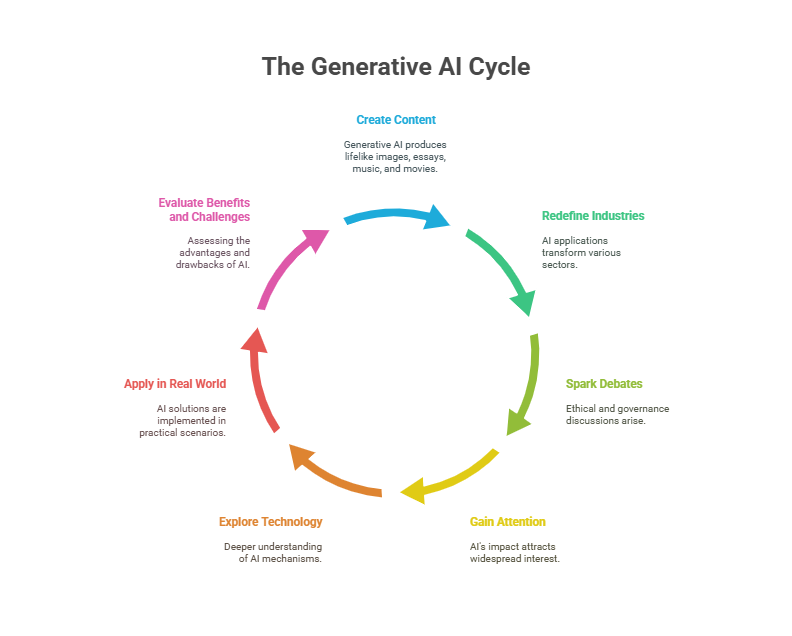
But what exactly is Generative AI? How does it work, and why is it gaining so much attention? This blog will break it all down. We’ll explore its technology, real-world applications, and the benefits and challenges it brings. By the end, you’ll understand why Generative AI is one of the most exciting advancements of our time.
What Is Generative AI?
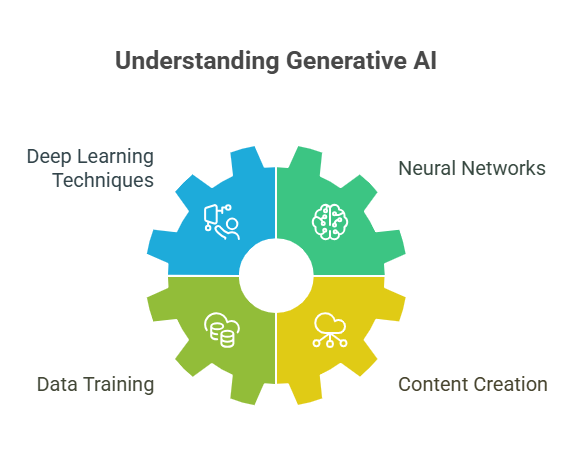
At its core, Generative AI refers to artificial intelligence systems designed to create new content, whether that’s images, text, music, or even videos. Unlike traditional AI, which is focused on analyzing and interpreting existing data, Generative AI has the unique ability to generate entirely new outputs.
Generative AI models are often built on deep learning techniques, particularly neural networks like Generative Adversarial Networks (GANs) and transformer architectures such as GPT (Generative Pre-trained Transformer). These systems are trained on massive amounts of data and learn to recognize patterns, so they can create outputs that mimic human knowledge and creativity. For instance, GPT-based models can draft essays, answer questions, and even engage in meaningful conversations.
How Generative AI Works
To understand how Generative AI works, it’s helpful to break it down into two main approaches:
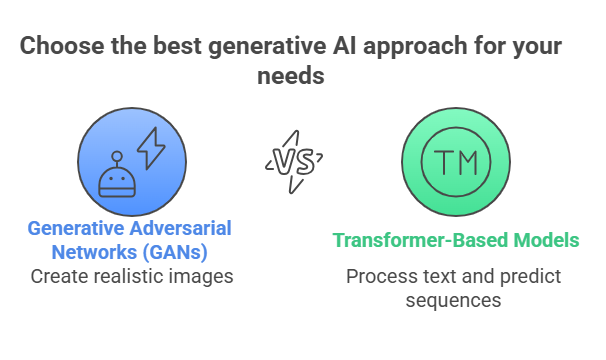
Generative Adversarial Networks (GANs):
GANs consist of two neural networks—a generator and a discriminator—competing against each other. The generator creates content, while the discriminator evaluates its quality. Over time, this adversarial process makes the outputs increasingly realistic. GANs are often used for creating images, like realistic human faces that don’t actually exist.
Transformer-Based Models:
Language models like GPT use transformer architecture to process text data. These systems predict the next word in a sequence based on previous context, allowing them to write coherent paragraphs, answer questions, or summarize information.
Both approaches rely on enormous datasets and powerful computing resources to function effectively. The ability of Generative AI to “learn” from data and produce creative results is what makes it so dynamic.
Applications of Generative AI Across Industries
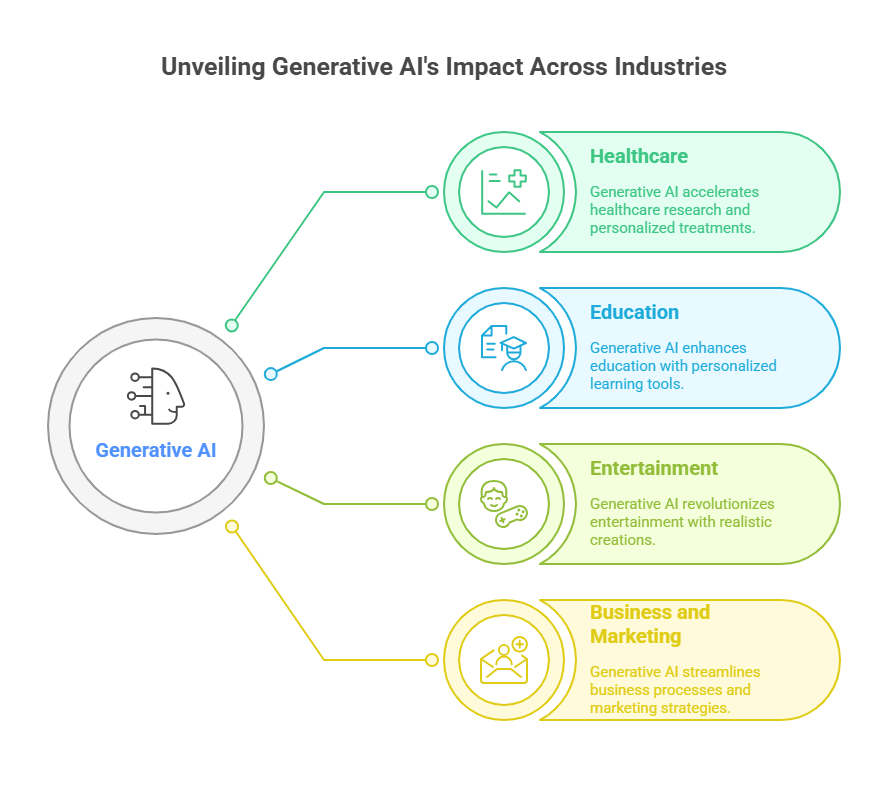
Gen AI is transforming nearly every industry by automating tasks, boosting creativity, and opening up new possibilities. Here’s how it is making an impact in key fields:
- Healthcare
Generative AI is revolutionizing healthcare in several ways. For instance, it can generate synthetic medical data to train algorithms for diagnosing diseases. Additionally, it’s being used to create personalized treatment plans or even assist in drug discovery. By simulating molecular structures, Gen AI accelerates research and reduces costs. For example, AI-driven models played a significant role in developing vaccines during the COVID-19 pandemic.
- Education
AI tutors powered by Generative AI are enhancing learning experiences. These tools can create personalized study materials tailored to individual learning styles. From automating essay grading to generating quizzes, Gen AI makes education more accessible and engaging. It’s also being used to develop immersive virtual learning environments, where students can interact with lifelike AI avatars.
- Entertainment
The entertainment industry has been a major beneficiary of Generative AI. Filmmakers and game developers are using AI tools to create realistic characters, animation, and even entire storylines. Music platforms employ AI to compose songs in various styles, while visual artists leverage it to generate unique digital artworks. With the advent of tools like DALL·E and Stable Diffusion, creatives can turn ideas into reality faster than ever before.
- Business and Marketing
From drafting emails to designing ad campaigns, Gen AI is streamlining business processes. It can analyze consumer data to create hyper-personalized marketing messages, tailor product recommendations, or even simulate customer interactions via chatbots. Retailers are also using AI to develop virtual fitting rooms, while businesses benefit from automated report generation and predictive insights.
The Benefits of Generative AI
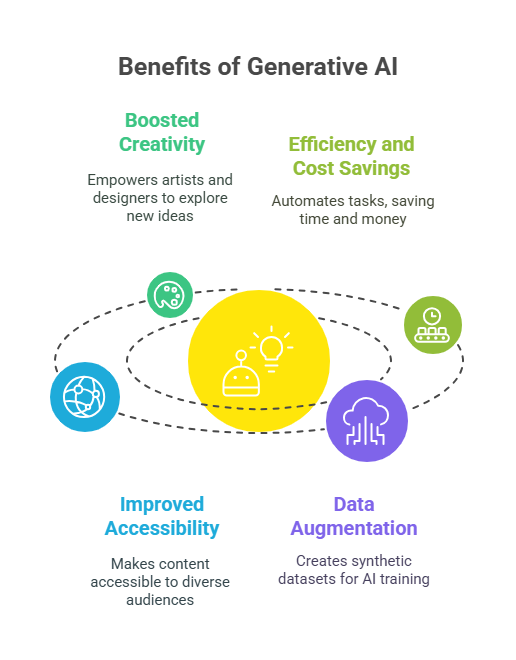
The versatility of Generative AI creates a range of benefits:
Boosted Creativity:
Generative tools empower artists, writers, and designers to experiment with new ideas, pushing the boundaries of what’s possible. AI-generated inspiration can lead to groundbreaking innovations.
Efficiency and Cost Savings:
By automating repetitive tasks, Generative AI saves time and money. For instance, businesses can use AI to generate bulk content quickly, which is particularly valuable in fields like marketing.
Improved Accessibility:
AI systems like speech-to-text generators and language translation tools make content more accessible to diverse audiences worldwide, bridging language and accessibility gaps.
Data Augmentation:
Generative models can create synthetic datasets for training other AI systems, especially in cases where real-world data is scarce or sensitive.
The Challenges of Generative AI
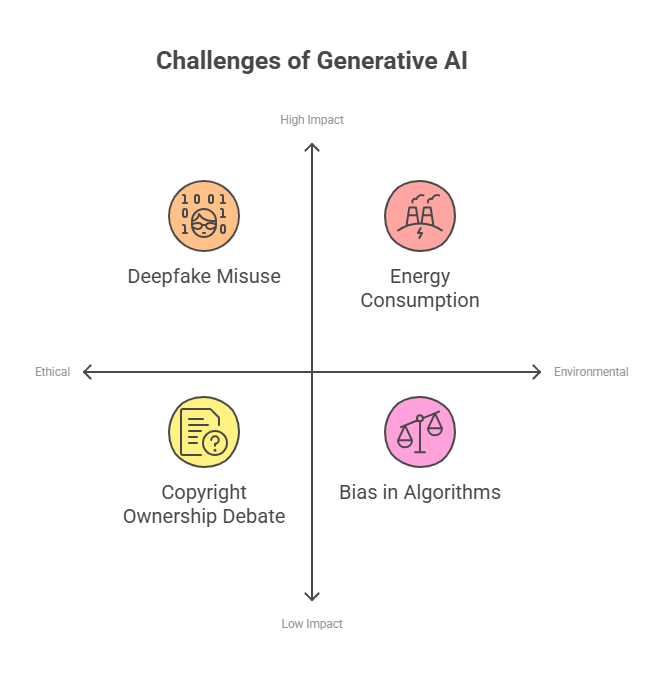
Despite its potential, Generative AI comes with significant challenges that cannot be ignored:
Ethical Concerns:
Generative AI can produce deepfake images or videos, raising questions about misuse. Fake content could damage reputations, spread misinformation, or compromise security.
Copyright and Ownership:
When AI generates content based on publicly available data, who owns the rights? This is a growing area of legal and ethical debate.
Bias and Fairness:
AI systems learn from data, which means they can inherit biases present in the training material. For example, biased outputs in hiring algorithms or facial recognition systems can perpetuate inequalities.
Energy Consumption:
Training large AI models requires substantial computational power, which contributes to environmental concerns. Sustainability remains a pressing issue within the AI community.
How Generative AI Is Changing the World
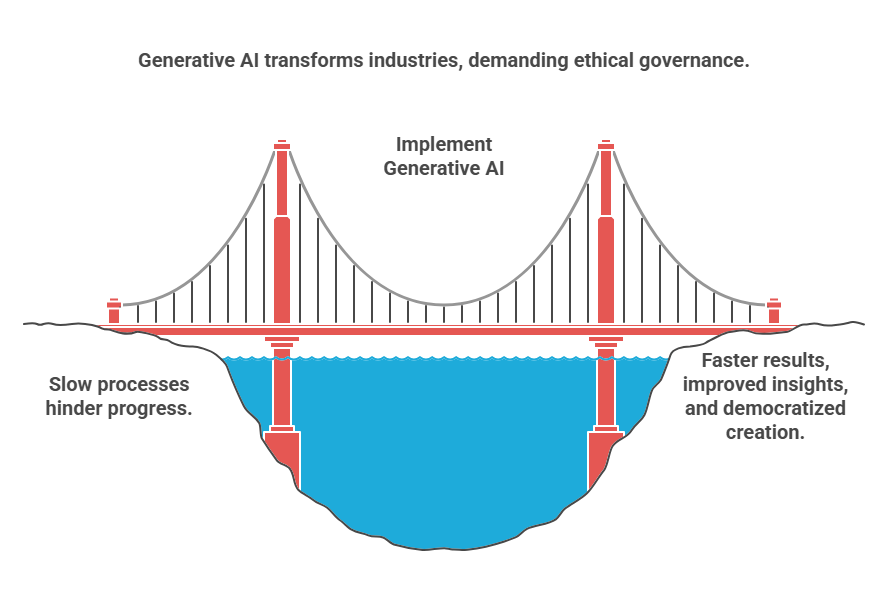
From streamlining healthcare systems to democratizing content creation, Generative AI is fundamentally altering the way we live, work, and communicate. For example, journalists leverage AI tools to draft articles quickly while focusing on in-depth reporting. Similarly, scientists bypass years of experimentations by simulating scenarios with AI-powered models.
At the same time, the rise of Generative AI provokes important conversations about privacy, ethics, and the role of humans in a world where technology can mimic human creativity. It’s clear that as society leverages AI’s potential, deliberate governance and oversight will be essential to ensure its positive impact.
The Future of Generative AI
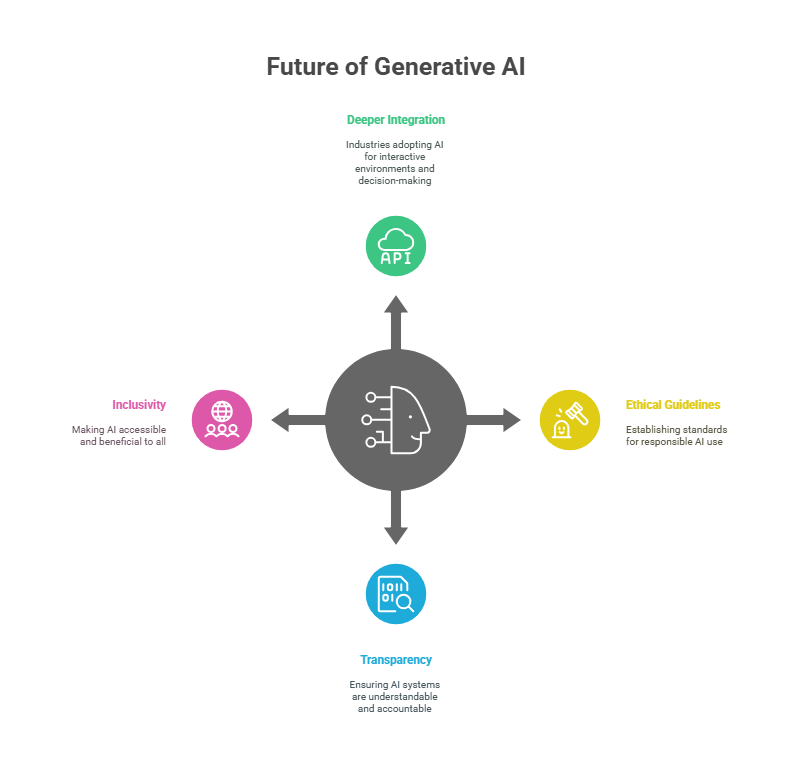
The rapid evolution of Generative AI suggests that its influence will only grow stronger. Industries will likely see even deeper integration of these tools, from more interactive virtual environments to highly sophisticated AI assistants capable of nuanced decision-making.
However, the trajectory of Generative AI depends on how we address its challenges. Establishing guidelines for ethical use, improving transparency, and making systems more inclusive will be key. Collaboration between technologists, policymakers, and the public is crucial for shaping the future of this transformative technology.
Final Thoughts
Generative AI isn’t just an innovation—it’s a game-changer with the potential to redefine countless fields. By understanding its capabilities, applications, and implications, we can harness its power responsibly and make meaningful progress in healthcare, education, business, and beyond.
Its ability to create, innovate, and solve problems reminds us that technology is a tool, not a replacement for human ingenuity. With mindful development and use, Generative AI can truly become a force for good in the world.